Presidential approval ratings, the public’s perception of how presidents are doing their jobs, are carefully watched indicators of presidential popularity that began with Franklin D. Roosevelt in the 1930s and continue with Donald Trump today.
But in an announcement Feb. 11, Gallup said it would no longer track presidential approval ratings, ending a high-profile service that started in 1938.
Gallup said it would stop publishing approval and favorability ratings of individual political figures starting this year. The move “reflects an evolution in how Gallup focuses its public research and thought leadership,” the company said in a statement to USA TODAY.
George Gallup, a statistician and founder of the American Institute of Public Opinion, sent pollsters across Depression-era America to ask people – Do you approve or disapprove of the way Roosevelt is handling his job as president?
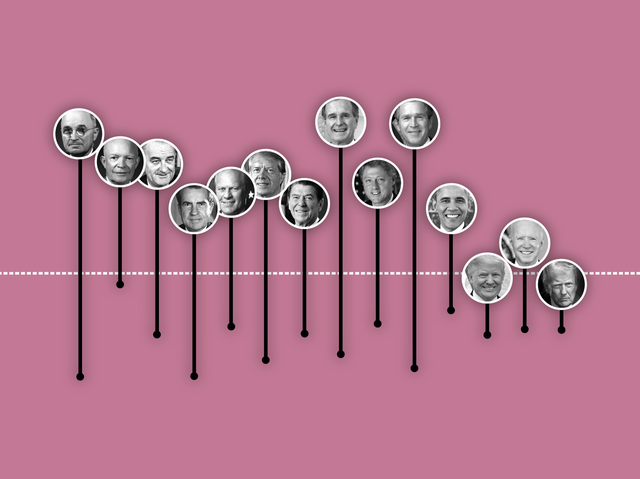
Here’s a look at the job approval ratings for presidents since 1945, according to Gallup polling.
The highs and lows of presidential job approval ratings
Unable to view our graphics? Click here to see them.
The approval numbers track more than just presidential popularity contests. These numbers serve as a measurement for the state of the country and are strongly affected by national crises, economic conditions and the often inflexible division in American politics.
The lowest Gallup presidential approval ratings
Among the past 13 presidents, Harry Truman received a 22% job approval rating, the lowest ever recorded, in a Gallup survey from Feb. 9-14, 1952.
Why? Truman was hurt by a slowing economy, a protracted military conflict in Korea, labor disputes and corruption in the federal government near the end of his second term, according to Gallup.
Although Trump does not have the lowest approval rating, he’s the first president who has scored below 50% in his first administration and during the first year of his second term in office.
About the Author